Ask anyone who has driven the Tenga–Bomdila–Dirang–Sela–Tawang road what stayed with them, and the answer is rarely just “the monastery.” It’s the string of things that come before and after it – a 700-year-old iron bridge still swinging over a glacial river, a lake formed overnight by an earthquake, a nunnery hardly anyone visits, a valley where the road simply stops at the last Indian village before Tibet. Tawang town is the obvious base, but the real trip is everything within a day or two’s drive of it.
Here’s a working list – the sights every itinerary rightly includes, and a handful most itineraries skip that we think deserve a place on yours.
The Classics: What Every Tawang Trip Should Include
Tawang Monastery (Galden Namgyal Lhatse)
Everything in Tawang orbits this one hill. Founded in 1680–81 by Merak Lama Lodre Gyatso on the instructions of the 5th Dalai Lama, Tawang Monastery is the largest Buddhist monastery in India and, by most counts, the second largest in the world. Its name translates loosely to “the site chosen by the horse is the divine paradise of complete victory,” a nod to the legend of how its location was decided. Inside the 300-year-old compound, walled in for nearly 900 feet, sit 65 residential buildings, a three-storey assembly hall with an 18-foot gilded Buddha, and a library holding gold-inked Kangyur and Tengyur scriptures. Time a visit around the Torgya festival (usually early January) and you’ll catch the masked ritual dances performed nowhere else.
-
- Young monks at Tawang Monastery
Sela Pass and Sela Lake
At 13,700 feet, Sela Pass is the theatrical entrance to Tawang – hairpin bends, prayer flags snapping in the wind, and on a clear day the frozen, ink-black Sela Lake right by the roadside. Since the Sela Tunnel opened in March 2024 (at the time, the world’s longest bi-lane tunnel at 13,000 feet), the pass itself is no longer the only way through, so travellers who want the views now get to choose between the tunnel’s all-weather convenience and the pass’s drama – most still stop for the pass.
-

- River originating from Sela Lake
Madhuri Lake (Sangetsar Tso) and PT Tso
About 35 km north of Tawang town, on the road toward Bumla, an earthquake-triggered landslide once dammed a mountain stream and quietly created Sangetsar Tso. Dead tree trunks still stand in the shallows. It picked up its popular name, Madhuri Lake, after a song from the 1997 film Koyla was shot here with Madhuri Dixit. A little further on, closer to the border, Pankang Teng Tso (PT Tso) sits at over 15,000 feet, colder, quieter, and considerably less visited – worth the extra half hour if your permit and the weather cooperate.
-

- Sangestser Lake or Madhuri Lake
Nuranang Falls (Jang Falls)
A short detour off the Tawang–Dirang road near Jang village drops you at the base of a roughly 100-metre waterfall, one of the few in the region with a small hydel plant tucked beside it powering local homes. It’s an easy, high-payoff stop – concrete steps take you right down to the spray.
-
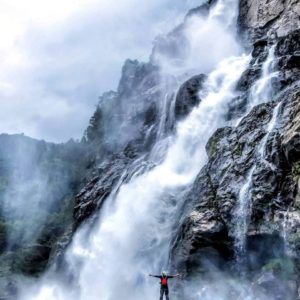
- Jung Falls Nuranang
Jaswant Garh War Memorial
Between Sela and Jang, a small memorial marks where Rifleman Jaswant Singh Rawat held a position against advancing Chinese troops for three days during the 1962 war, reportedly with help from two local women, Sela and Nura, after whom the pass and the falls are popularly said to be named. To this day, army personnel at the post keep his bed made and his boots polished as a mark of respect – a piece of living regimental folklore worth hearing in person from the soldiers on duty.
-
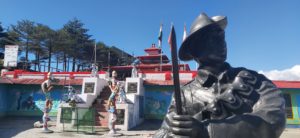
- Jaswant Garh War Memorial
Tawang War Memorial
In Tawang town itself, built in the shape of a traditional chorten, this memorial honours the 2,420 Indian soldiers who lost their lives defending the sector in 1962. An eternal flame burns at its base, a small museum displays photographs and wartime artefacts, and a large golden Buddha statue watches over the grounds – a quietly moving stop rather than a scenic one.
-
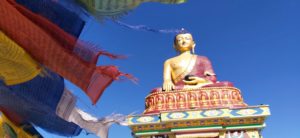
- The Giant Buddha Statue Tawang
Urgelling Monastery
Barely 3 km from Tawang town, this modest, centuries-old monastery is easy to skip and shouldn’t be – it’s the birthplace of Tsangyang Gyatso, the 6th Dalai Lama, remembered as much for his poetry and unconventional life as for his religious title. A stupa inside marks the exact spot, and the whole complex has a stillness the bigger monastery in town doesn’t.
-
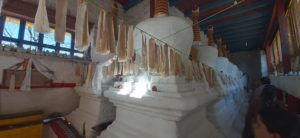
- Stupas inside the Urgelling Monastery
Bumla Pass
Right on the McMahon Line at 15,200 feet, 37 km from Tawang, Bumla is where thousands of Tibetan refugees – including the 14th Dalai Lama in 1959 – crossed into India. It’s open to Indian nationals only, on specific dates, with permits arranged in advance through the Deputy Commissioner’s office and the Army; foreign nationals aren’t permitted at all. Snow closes it for much of the year, so treat a Bumla visit as a bonus, not a guarantee.
Off the Beaten Track: For Travellers Who Want More
Everything above is on nearly every Tawang itinerary. The following rarely make the cut – mostly because they take an extra day or two – but for travellers with the time, this is where Tawang stops feeling like a checklist.
Chakzam Bridge
About 25 km from Tawang town, an iron-chain bridge still spans the Tawang Chu river exactly where it was built in the 14th–15th century by Thangtong Gyalpo, the Tibetan monk-engineer credited with building dozens of similar bridges across Tibet and Bhutan (he’s sometimes called the “iron bridge lama”). Locals still use it. It’s one of the very few places in India where you can stand on 600-year-old working infrastructure.
-
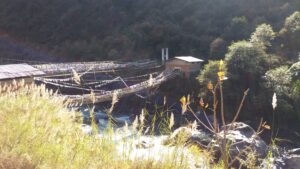
- Chakzam Bridge, Tawang. Photo: Mihitsomu, CC BY-SA 4.0, via Wikimedia Commons.
Lumla
A small border town about 45 km from Tawang, en route to the far western valleys, Lumla is best known for its towering Tara Devi statue and prayer hall, and as the last real stop before the road forks toward Zemithang. Most travellers pass through without stopping; a short break here is worth it.
Zemithang
Roughly 90 km west of Tawang – three to five hours by SUV via Lumla – Zemithang is the last inhabited valley before the Line of Actual Control, and arguably the single best offbeat addition to a Tawang trip if you can spare two extra days. There’s a lot packed into this one valley: the 28-metre Gorsam Chorten, modelled on Nepal’s Boudhanath Stupa and among the largest in the eastern Himalayas; the Dalai Lama’s Holy Tree at Khinzemane, said to have grown from the walking stick the 14th Dalai Lama left behind while crossing into India in 1959; and the sandbars of the Nyamjang Chu river, one of the only wintering sites in India for the rare, sacred black-necked crane. Further toward the border sits Chumi Gyatse – 108 sacred springs said to have burst from solid rock when Guru Padmasambhava flung his rosary at it, still a living pilgrimage site right up against the frontier.
-
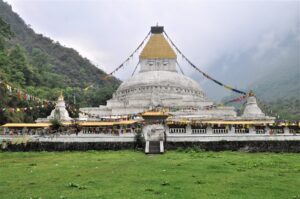
- Gorsam Chorten, Zemithang. Photo: Prof Ranga Sai, CC BY-SA 4.0, via Wikimedia Commons.
Ani Gompa (Brahma-dung-chung Nunnery)
Tawang’s monastery gets all the attention; its nunnery, one of the oldest Ani Gompas in the district, gets almost none. The nuns here follow much the same monastic routine as the monks across town, in a far quieter setting – a good half-day addition for anyone interested in the fuller picture of Monpa Buddhist life, not just its most photographed corner.
-
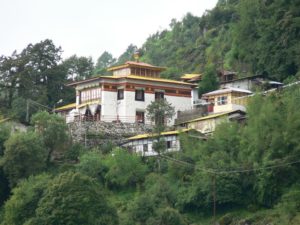
- Gyangong Ani Gompa Tawang
Gorichen Peak Viewpoints
At roughly 22,500 feet, Gorichen is the highest peak in Arunachal Pradesh, straddling the Tawang–West Kameng border. You don’t need a permit or a trek to appreciate it – on a clear day it’s visible from Sela Pass and several points along the Tawang valley – but if you do want to get closer, base-camp treks exist for anyone with the time and the fitness.
Planning the Trip
A few practicalities worth sorting before you go. Indian citizens need an Inner Line Permit (ILP), applied for online or through the designated offices in Guwahati, Itanagar or Delhi. Foreign nationals need a Protected Area Permit (PAP) instead, issued only to groups of two or more travelling through a registered tour operator; nationals of China, Pakistan and Bangladesh aren’t permitted into Arunachal Pradesh at all, and foreign nationals cannot visit Bumla Pass regardless of permit.
September–October brings the clearest skies and easiest roads. November–February is colder but rewards you with snow-covered passes and frozen lakes. March–April brings the rhododendrons out. May–August is monsoon season – greener, quieter, but with a real risk of landslides on the mountain roads.
Budget three to four nights in and around Tawang for the classics alone. If Chakzam, Lumla and Zemithang are on your list too, plan for six to eight days from Guwahati and back, with overnight halts at Dirang or Bomdila to break up the drive.
If you’d rather have someone else handle the permits, the driver, and the itinerary, we already run several ready-made Tawang itineraries you can start from:
- Tawang at a Glance (5N/6D, Guwahati – Bomdila – Tawang – Dirang – Nameri) – the quickest way to cover the classics.
- Tawang Tour – The Land of the Monpas (7N/8D, Guwahati – Nameri – Dirang – Tawang – Bomdila – Bhalukpong) – a bit more breathing room and culture.
- Arunachal Pradesh Adventure (9N/10D, Bhalukpong – Dirang – Tawang – Bomdila – Kaziranga) – adds Kaziranga’s wildlife to the mix.
- Discover Tawang (9N/10D, Nameri – Dirang – Tawang – Bomdila – Shergaon) – swaps in a night at Shergaon and Nameri’s rainforest camps.
- Best of North East India (11N/12D, Guwahati – Shillong – Mawlynnong – Dawki – Cherrapunjee – Nameri – Dirang – Tawang – Bomdila – Bhalukpong) – pairs Tawang with Meghalaya’s waterfalls and living root bridges.
- Seven Sisters Tour (23N/24D, all seven Northeast states) – for the trip of a lifetime, with a full Tawang leg built in.
Get in touch and we’ll adapt any of these – including the offbeat stops above – to your dates and pace.